 1-800-529-8255
 1-800-529-8255

 Back
Back
 Trip and Fall: $200,000 Recovered
 What Causes Jackknife Truck Accidents in California?
A jackknife truck accident can happen in seconds. When a tractor-trailer suddenly loses control and its trailer swings outward, it...
Read More
8730 Wilshire Boulevard, California 90211 
Get Help Now

Request A free confidential case review

Case Results :
Recently Written:
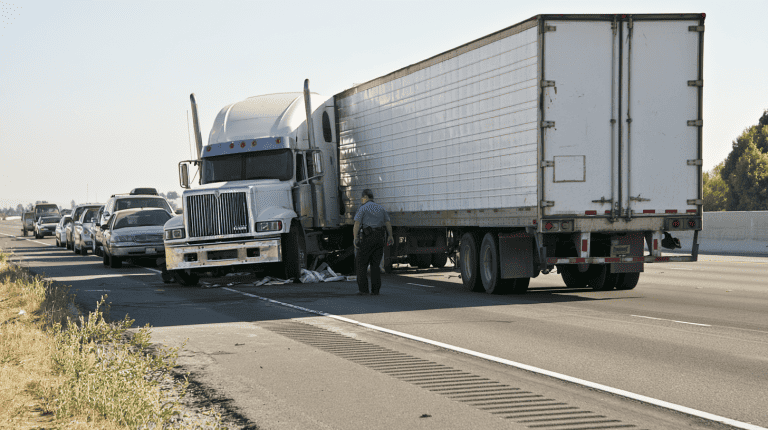
A jackknife truck accident can happen in seconds. When a tractor-trailer suddenly loses control and its trailer swings outward, it...
Read More
After losing a loved one in a fatal accident, families often face difficult questions about medical bills, funeral expenses, lost...
Read More

Rear-end collisions are among the most common types of car accidents in California. They can happen when a driver follows...
Read More
Whether homeowners insurance covers mold remediation in California depends largely on what caused the mold and what your policy covers....
Read More

Premises liability refers to the legal responsibility property owners have to maintain safe conditions and protect visitors from preventable injuries....
Read More
Partner with our experienced attorneys and take the first step toward justice.
Get Your Free Consultation
Driver error causes more than 90 percent of the vehicle collisions in the Golden State. In terms of liability, the key questions are which driver made the mistake and what entity or person is financially responsible for those damages. We’ll examine these questions in this post.
We know driver error causes more than 90 percent of the vehicle collisions in the Golden State. We also know that, between 1985 and 2010, the number of fatal car crashes in California dropped significantly. Then, the number began rising again. Uber Technology was incorporated in 2009. The two dates (2009 and 2010) are not coincidental.
When rideshare operators, or any other tortfeasors (negligent drivers) cause injury, a Los Angeles rideshare accident lawyer obtains the compensation these victims need and deserve. This compensation usually includes money for economic losses, such as medical bills, and noneconomic losses, such as pain and suffering.
Before we discuss first party liability (who caused the crash), we should touch on the duty of care. In California, commercial drivers, like Uber drivers, have a higher duty of care. The higher duty of care makes it easier for a Los Angeles rideshare accident lawyer to prove negligence, or a lack of care, by a preponderance of the evidence, or more likely than not.

Rideshare drivers normally breach their duty of care when they drive while impaired. Common rideshare impairment issues include:
Most rideshare operators have full-time commitments elsewhere. So, when they get behind the wheel, they are dangerously fatigued. Fatigue has mental and physical effects. Driving after eighteen consecutive awake hours is like driving with a .05 BAC level. That’s above the legal limit for commercial drivers in California.
To counteract the effects of fatigue, many commercial operators use legal substances, like energy drinks, or illegal substances, such as amphetamines. If a driver pops a pill to get ready for his/her shift, the drug clouds judgement abilities. Furthermore, once the drug wears off, users often crash fast and hard.
Uber mandates distracted driving. Hands-free GPS navigation devices are cognitively and visually distracting. They force drivers to take their eyes off the road and their minds off driving. Hand-help devices are even worse. They add manual distraction (taking a hand off the wheel) to the mix.
Aggressive driving is also an issue among rideshare operators. Uber and other companies pay drivers by the trip, not by the hour. To complete as many rides as possible in as little time as possible, most ridesharing operators:
That last bullet point illustrates the difference between the duty of utmost care (commercial drivers) and the duty of reasonable care (noncommercial drivers). Because they have a lower duty of care, most noncommercial drivers must slow down and use extra caution when weather or traffic conditions are poor. Arguably, commercial drivers cannot operate under such conditions.
In California, Uber or another ridesharing company could be legally responsible for damages under one of two legal theories.

Before we discuss these theories, we should touch on the extent of Uber’s liability in car crash cases. Other ridesharing companies, such as Lyft, have similar policies.
Negligent hiring is one third party liability theory. All companies, including Uber, have a duty to hire fully qualified employees. A person with a valid drivers’ license is not necessarily a qualified ridesharing operator.
On a related note, Uber also has a duty to properly supervise and discipline employees. The company cannot let operators freelance. Additionally, if someone lodges a complaint against a driver, the company must thoroughly, efficiently, and transparently investigate that complaint.
Respondeat superior is another possible third-party liability theory. Employers are financially responsible for any damages their employees negligently cause during the course and scope of their employment.
Rideshare operators are employees for negligence purposes, even if they’re independent contractors for other purposes. Furthermore, all three of the aforementioned driver duties fall within the course and scope of employment.
Usually, the company is liable for rideshare accidents in California. For a free consultation with an experienced pedestrian injury lawyer in California, contact the Law Offices of Eslamboly Hakim. Virtual, home, and hospital visits are available.
We’re here to ease your stress and guide you through every step of recovery.
Get Support NowLiability in a California rideshare accident usually depends on who caused the crash. The at-fault driver may be responsible, but companies like Uber or Lyft may also share liability in certain situations.
Yes. When a driver is transporting a passenger or has accepted a ride request, Uber and Lyft insurance coverage may provide up to $1 million for injuries and damages.
If the driver was not logged into the rideshare app, the case is treated like a normal crash. The driver’s personal auto insurance typically covers the accident.
In some cases, yes. A Los Angeles rideshare accident lawyer may pursue claims against the company for negligent hiring, poor supervision, or other legal liability theories.
Victims of a rideshare accident in California may recover compensation for medical bills, lost income, property damage, and pain and suffering.
Tag:
I like the fight – the fight to hold Big Insurance accountable, the fight to find justice for real people, and the fight to level the playing field for...Read More
