 1-800-529-8255
 1-800-529-8255

 Back
Back
 Trip and Fall: $200,000 Recovered
 Fireball Collision in Downtown LA
Investigators believe that alcohol intoxication was a factor in a September 14, 2025, crash that seriously injured a half-dozen motorists...
Read More
8730 Wilshire Boulevard, California 90211 
Get Help Now

Request A free confidential case review

Case Results :
Recently Written:

Investigators believe that alcohol intoxication was a factor in a September 14, 2025, crash that seriously injured a half-dozen motorists...
Read More

Mostly thanks to advancing technology, fatal airplane accidents are very rare. However, statistics don’t comfort people who lose friends or...
Read More

One reason for these delays is the difference between fault and liability. A fault admission at the scene, or even...
Read More

The actor told police that a garbage truck ran him off the road, prompting an October 2025 car crash in...
Read More

For many people, a sightseeing tour of the Nevada desert, or a skywatching trip to this remote area, is the...
Read More
Partner with our experienced attorneys and take the first step toward justice.
Get Your Free Consultation
The primary difference between criminal victim restitution and civil damages is the difference between minimum and maximum. Victim restitution is usually an afterthought in criminal cases. Civil damages, on the other hand, are the primary focus in a civil case.
Judges often order crime victim restitution, which is also known as a civil penalty, in violent crime matters, like assault and murder. Victims of nonviolent crimes, such as stalking, are almost never entitled to restitution in criminal court. However, damages take center stage in civil cases because money damages accomplish dual purposes. They punish tortfeasors (negligent actors) and put victims in a better place.
An Experienced Personal Injury Attorney is a vital partner in both criminal and civil court cases. In both forums, a lawyer is a strong voice for crime victims during proceedings that often don’t fully allow these individuals to tell their stories.
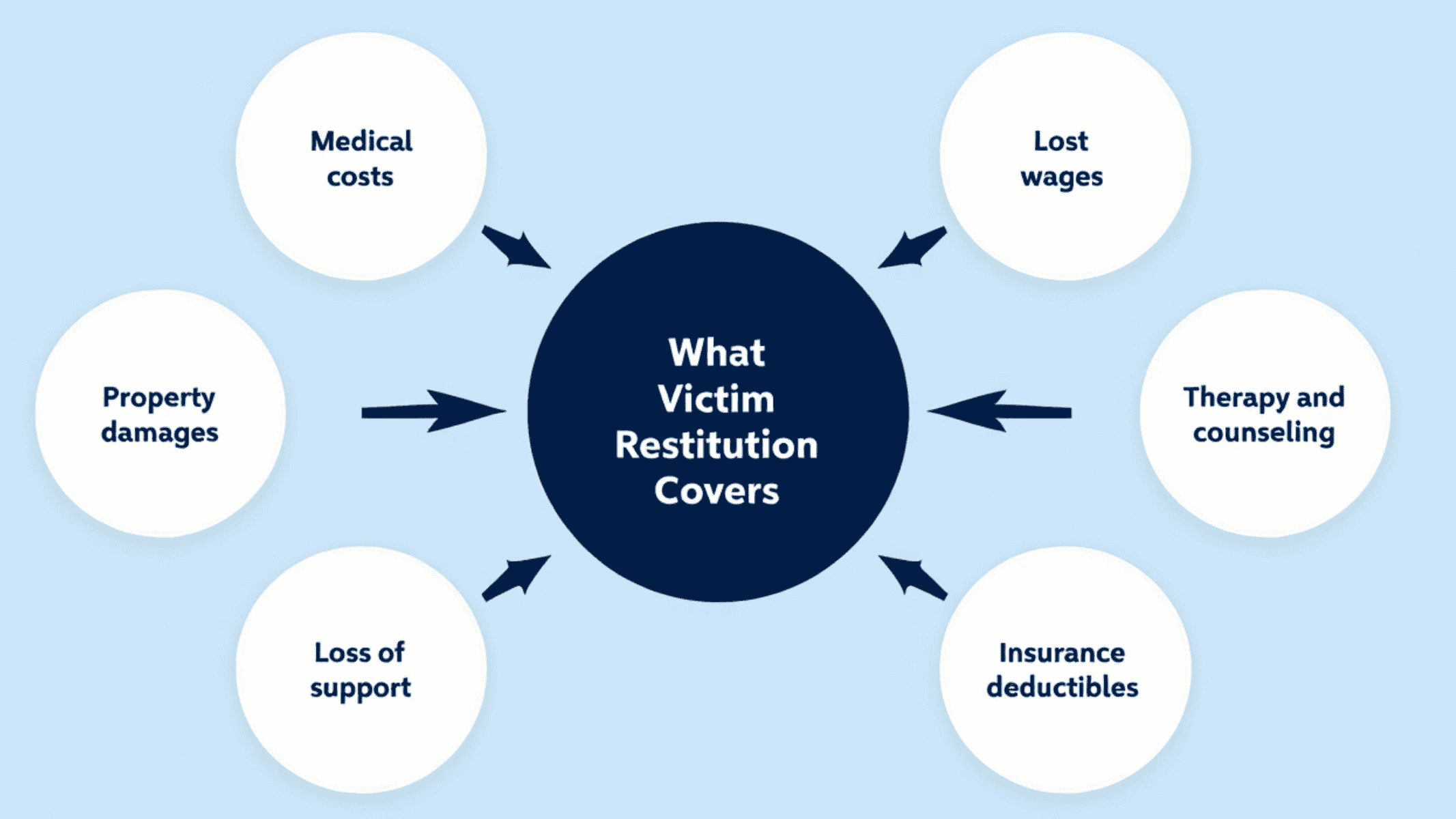
Minimal crime victim restitution usually includes some money for medical bills. Direct restitution for property lost in theft and other such cases is usually available as well.
Usually, judges order restitution payment as a condition of probation. This payment could also be a condition of pretrial diversion or another alternative resolution method. However, many judges hesitate to enforce these mandates. Putting a defendant in jail for not paying criminal restitution would essentially transform the county jail into an illegal debtors’ prison.
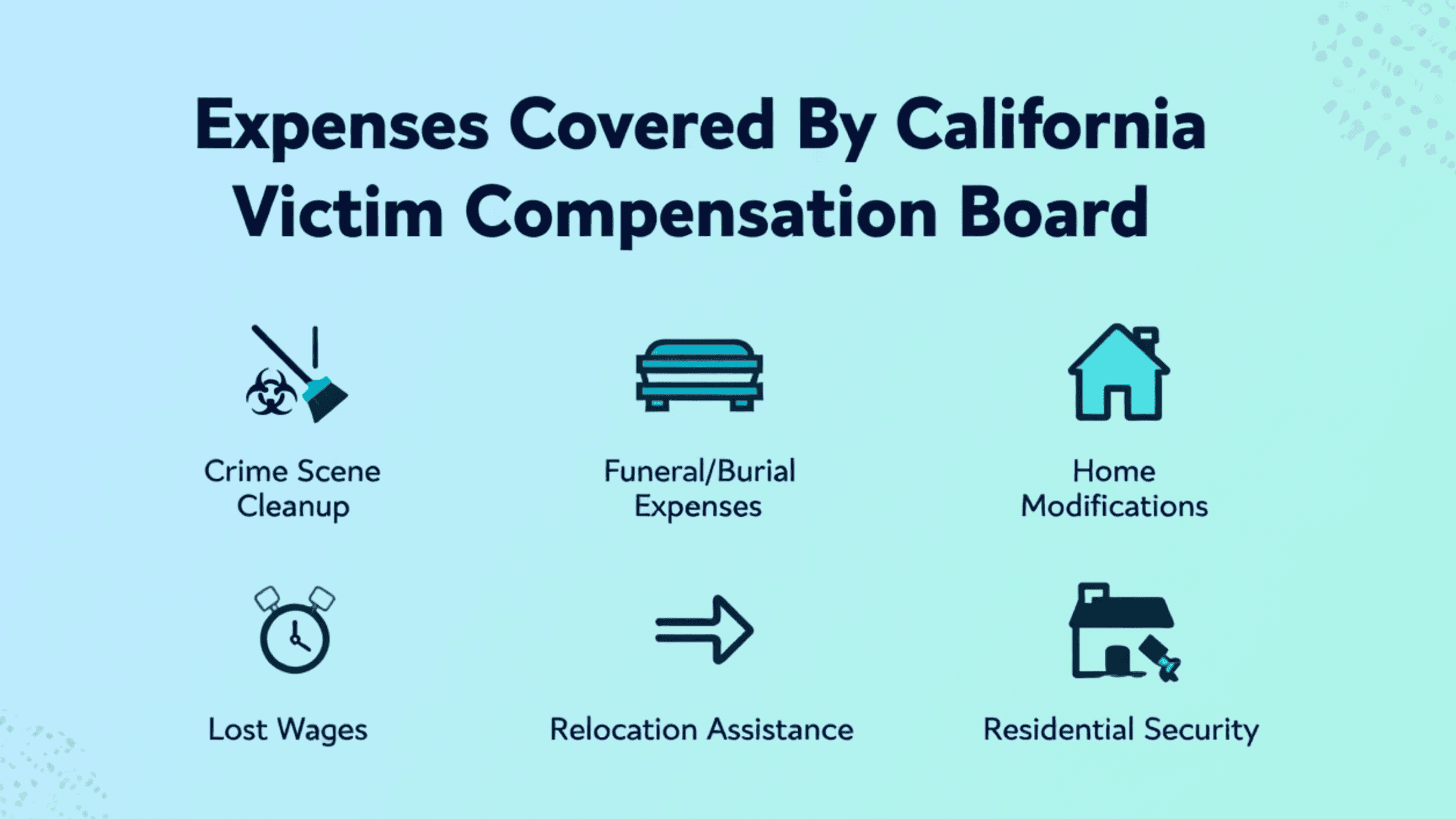
In addition to the aforementioned direct restitution, indirect restitution may be available as well. The California Victim Compensation Board sometimes covers expenses like:
The CVCB unilaterally sets payout limits in these cases. Additionally, no money usually changes hands in indirect reimbursement matters. Typically, a provider under contract with the state performs services for free or at a reduced cost.
Plea bargains resolve most criminal cases. Generally, prosecutors aren’t legally required to consult with victims before they make deals with defendants. A Beverly Hills Personal Injury Attorney helps ensure that crime victims are key players in the resolution process.
By their very nature, civil damages are much more comprehensive than criminal restitution. Usually, a Los Angeles personal injury lawyer obtains compensation for economic and noneconomic losses.
Economic losses are like a combination of direct and indirect restitution. As a bonus, the victim, not the state, determines the value of economic losses.
A DUI or other car crash is a good example. In most cases, to determine the amount of property restitution, the state uses a vehicle’s Blue Book value. The process is different in civil court. The family car often has an emotional value which, in many cases, exceeds its financial value. Additionally, Blue Book values usually don’t account for market conditions.
We’re just getting started. Civil damages also include compensation for noneconomic and intangible damages, such as:
To determine a reasonable value of noneconomic damages, a personal injury lawyer typically multiplies the economic losses by two, three, or four, depending on several factors.
Most civil cases also settle out of court. But victims usually get a chance to tell their stories on the record in civil court. Deposition transcripts are part of a case’s permanent record. Additionally, victims decide when and if to settle cases. A Personal Injury Attorney in California is strictly an advisor and an advocate.
The amount of money isn’t the only difference between criminal victim restitution and civil damages. In many cases, a third party is financially responsible for civil damages. So, personal injury attorneys have collection options in addition to pay or go to jail.
In California, property owners, like landlords, are financially responsible for crime-related damages if they don’t provide adequate security. Some factors to determine include the owner’s control over the property, likelihood of serious injury, the victim’s status as an invited or uninvited guest, the cost of preventing injury, and the industry standard security level.
Negligent security claims are quite complex. Typically, out-of-state holding companies legally control nursing homes, grocery stores, and other such public access property owners. These owners are also financially responsible for accidental injury damages, such as slip-and-fall damages.
Amount is the main difference between criminal victim restitution and civil damages. For a free consultation with California Personal Injury Lawyers, contact the Law Offices of Eslamboly Hakim. We do not charge upfront legal fees in these matters.
We’re here to ease your stress and guide you through every step of recovery.
Get Support NowCriminal restitution provides the minimum compensation a court requires, while civil damages allow me to pursue the maximum recovery for your losses.
No. Restitution is usually ordered in violent crime cases. Victims of nonviolent crimes often receive little or no restitution unless we pursue a civil claim.
Judges tend to focus on punishment in criminal cases, not compensation. Restitution covers only basic, direct costs, and courts rarely enforce large payments.
It may include medical bills, property loss, lost wages, relocation, and other expenses approved by the California Victim Compensation Board.
In civil court, I can pursue the full value of your losses, including pain and suffering, emotional harm, and other non-economic damages that criminal court does not address.
You do, with my guidance. Unlike criminal restitution where the state sets limits, civil cases allow us to present the true impact of your injuries.
Yes. Civil claims allow recovery for pain, suffering, loss of enjoyment of life, emotional distress, and impact on relationships.
Most settle, but you still get a chance to share your story on the record through depositions. You also decide if and when to settle.
Many times a third party, like a property owner or business, is responsible. I investigate all possible sources of compensation.
Yes, if they failed to provide reasonable security. Landlords, businesses, nursing homes and similar property owners can be held financially responsible.
Absolutely. If negligent security or unsafe conditions contributed to your injury, I can pursue compensation even if the property is owned by an out-of-state company.
As early as possible. I can protect your rights in both criminal and civil proceedings and make sure you are not overlooked during plea deals or settlements.
Tag:
I like the fight – the fight to hold Big Insurance accountable, the fight to find justice for real people, and the fight to level the playing field for...Read More
