 1-800-529-8255
 1-800-529-8255

 Back
Back
 Trip and Fall: $200,000 Recovered
 What is Premises Liability and How Does It Work?
Premises liability refers to the legal responsibility property owners have to maintain safe conditions and protect visitors from preventable injuries....
Read More
8730 Wilshire Boulevard, California 90211 
Get Help Now

Request A free confidential case review

Case Results :
Recently Written:

Premises liability refers to the legal responsibility property owners have to maintain safe conditions and protect visitors from preventable injuries....
Read More

Self-driving cars are designed to make roads safer, but they cannot eliminate every accident. While autonomous vehicle technology may reduce...
Read More
After a car accident, many victims are left dealing with painful injuries, expensive medical bills, vehicle repairs, lost income, and...
Read More

A lawyer’s mistake does not automatically mean legal malpractice. Even experienced attorneys can face cases that do not end in...
Read More
Facing a landlord dispute can be stressful, especially when unsafe conditions in your rental home put your health or safety...
Read More
Partner with our experienced attorneys and take the first step toward justice.
Get Your Free Consultation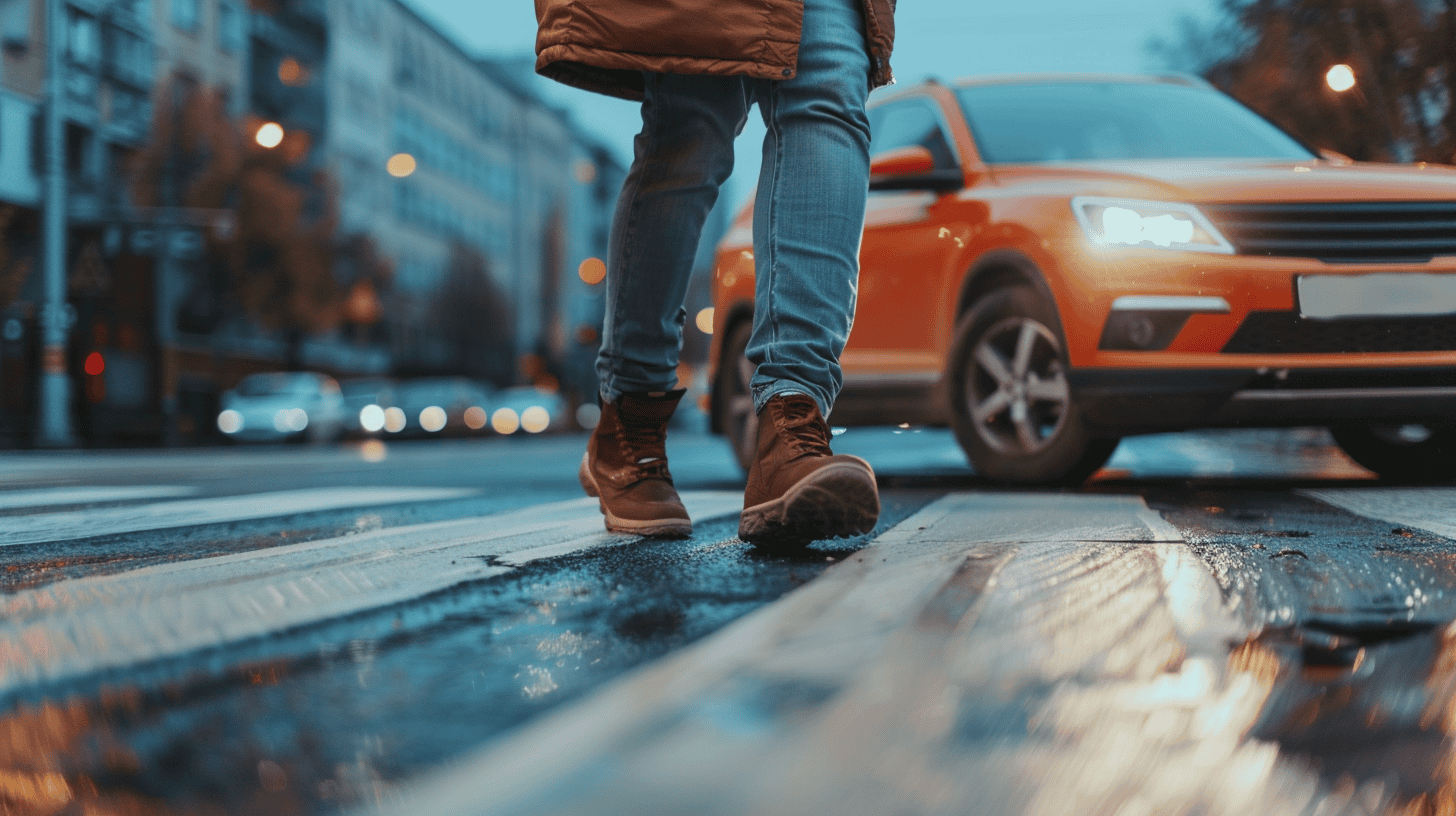
If you hit a pedestrian and an insurance investigator or first responder says the pedestrian was at fault, you (or more likely your insurance company) could still be liable for damages, due to the difference between fault and liability.
Fault is like the halftime score of a football game. Fault is a preliminary determination based solely on the evidence immediately available at the scene. Liability, which is like the final score of a football game, is a final determination based on all available evidence as well as applicable legal theories. More on these things below.
These issues are especially significant for California’s uninsured drivers. A fault determination does not mean you are out of the woods. A Los Angeles pedestrian injury lawyer might still need to speak up for you in court. This representation is necessary for victims as well. The presence, or absence, of a lawyer makes a huge difference in terms of settlement amount.
The extent of injury also affects the settlement amount. Medical expenses, which usually exceed $40,000, are typically the largest component of economic damages in a pedestrian injury claim. Then, a Los Angeles pedestrian injury lawyer normally uses the economic damages to calculate the noneconomic damage, which include pain and suffering.
Since pedestrians have no protection from oncoming vehicles, they often sustain permanent head injuries, such as:
Pacing often helps people feel more alert, because the motion causes the brain to tap the skull. The extreme force in a pedestrian accident hurls the brain against the skull, causing injury, not stimulation. sTBIs and other head injuries are normally permanent. Dead brain cells do not regenerate.
Most moderate TBIs are also motion-related. Whereas sTBIs are common in high-speed accidents, mTBIs (concussions) are more common in low-speed accidents, such as parking lot pedestrian collisions. In many cases, mTBI symptoms are so mild that these victims don’t “feel” hurt and don’t seek immediate medical attention. But as mentioned, these injuries are serious and permanent.
Yes, Post Traumatic Stress Disorder is a physical brain injury. Extreme stress, like the terror of an oncoming vehicle, changes the brain’s chemical composition. Symptoms of this imbalance include hypervigilance, depression, and anger. Because PTSD has a chemical cause, it also has a chemical solution. Unfortunately, doctors still don’t know what that solution is. Available PTSD medications only manage the symptoms.
Drivers often become victims as well, especially PTSD victims. The memory of a helpless person in the path of a vehicle you’re powerless to stop is hard to shake.
Tortfeasors (negligent drivers) are powerless to stop if they’re traveling too fast. Speed multiplies stopping distance. Speed also multiplies the force in a collision, transforming mTBIs into sTBIs.
Witness statements, medical bills, the vehicle’s Event Data Recorder, and the police report are usually the main evidence in a pedestrian injury lawsuit. Only one of these four is immediately available at the scene, and it’s only partly available.
Witness statements are this partially available evidence. Emergency responders and insurance investigators often only interview witnesses who loiter at the scene and voluntarily come forward. That’s not the end of the story. Attorneys usually find additional witnesses later who remember things differently.
The police report is usually available about a week after the accident. Final medical bills become available weeks, months, or sometimes years after the accident. EDR information, which is not available at the scene, includes:
Usually, a Los Angeles pedestrian injury lawyer partners with an accident reconstruction professional who puts these bits of evidence together like pieces of a jigsaw puzzle.
Subsequent evidence often reverses preliminary fault determinations. Two legal doctrines, comparative negligence and sudden emergency, often come into play as well.
Comparative negligence shifts liability from one party to the other. Assume Jim crossed the street with the light, but because he was buried in his phone, he did not stop and look both ways. If the phone’s usage log shows he was using the device when he crossed the street, a jury might conclude that Jim was partially or even mostly responsible for the accident.
Incidentally, attorneys must act quickly to preserve evidence like device use logs, before the owner “accidentally” deletes the information and that evidence is gone forever.

Usually, comparative negligence only reduces the amount of compensation the pedestrian receives. Sudden emergency, however, is a complete defense. It applies if the driver:
Most drivers reasonably react to pedestrian accidents. They pull over, help victims as much as they can, summon help if no one else does, and remain at the scene until released.
The second element, sudden emergency, is much harder to prove. Usually, a “sudden emergency” is a completely unanticipated emergency, such as a hood fly-up. A pedestrian in the road, even a jaywalking pedestrian, is an everyday hazard that, according to the duty of care, drivers must anticipate and avoid.
If you hit a pedestrian and they are at fault, you may still be on the hook for damages. For a free consultation with an experienced pedestrian injury lawyer in Los Angeles, contact the Law Offices of Eslamboly Hakim. The sooner you reach out to us, the sooner we start working for you.
We’re here to ease your stress and guide you through every step of recovery.
Get Support NowYes. Even if a pedestrian initially appears to be at fault, a driver may still share legal responsibility. Liability is determined after reviewing all evidence and applying legal principles such as comparative negligence.
Fault is an early assessment made at the accident scene based on limited evidence. Liability is the final legal determination after investigators review additional evidence, witness testimony, and applicable laws.
Common evidence includes witness statements, police reports, medical records, and vehicle event data recorder information such as speed, braking, and steering activity before the crash.
Comparative negligence means both the driver and pedestrian can share responsibility. If the pedestrian is partially at fault, their compensation may be reduced by their percentage of responsibility.
Drivers should stop immediately, call emergency services, assist the injured person if possible, and remain at the scene. It is also important to report the accident and speak with a lawyer before discussing the case with insurance companies.
Tag:
I like the fight – the fight to hold Big Insurance accountable, the fight to find justice for real people, and the fight to level the playing field for...Read More
