 1-800-529-8255
 1-800-529-8255

 Back
Back
 Trip and Fall: $200,000 Recovered
 How an Insurance Claim Lawyer Can Help After Water or Mold Damage
Water or mold damage can leave your home unsafe, disrupt your business, and create unexpected financial stress. While you expect...
Read More
8730 Wilshire Boulevard, California 90211 
Get Help Now

Request A free confidential case review

Case Results :
Recently Written:

Water or mold damage can leave your home unsafe, disrupt your business, and create unexpected financial stress. While you expect...
Read More

Pool owners in California have a legal duty to keep their swimming pools reasonably safe. When they fail to address...
Read More

Yes, you can sue for emotional distress after an accident in California. Emotional trauma is a real and recognized form...
Read More

A slip and fall accident can leave you with serious injuries, unexpected medical bills, lost income, and uncertainty about what...
Read More

Yes, you can sue for punitive damages in a product liability case, or any other injury case for that matter....
Read More
Partner with our experienced attorneys and take the first step toward justice.
Get Your Free Consultation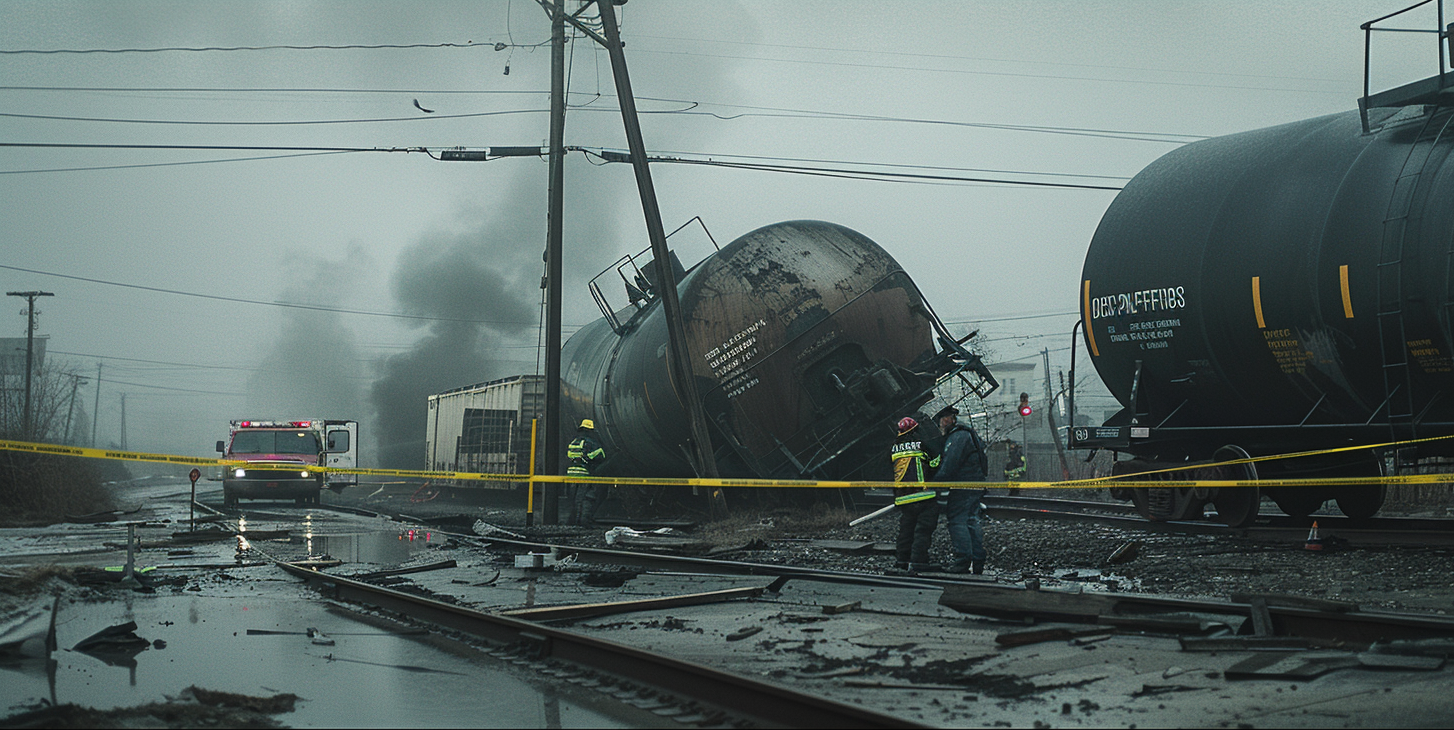
For many businesses, rail is the most cost-effective way to quickly move goods and people. To take further advantage of the cost-efficiency marketing point, many transportation and shipping companies take safety shortcuts to save money. That combination (lots of freight and suspect safety practices) has caused some disastrous train accidents over the years.
The incredible train accidents highlighted below are diverse in many ways. But they’re alike in other ways, such as the serious injuries these train wrecks caused, not only for people on or near the train but also for people in the surrounding communities. Only a top Los Angeles train accident lawyer can handle these complex cases and obtain maximum compensation for these serious injuries.
In July 2013, a high-speed train derailed near Santiago de Compostela, Spain, killing 79 people and injuring over 140. Investigators learned that the train entered a sharp curve at more than twice the permitted speed. Human error, combined with insufficient automated speed controls, caused the crash.
In terms of safety, the Santiago de Compostela train wreck included some lessons that many train operators still haven’t fully put into practice, such as:
Legally, this wreck highlights the significant difference between a substantial cause and a contributing cause, especially in terms of liability.
Many causes contributed to the outbreak of World War II in Europe. Germany’s invasion of Poland in 1939 substantially caused that conflict. For a Los Angeles train accident lawyer, the substantial cause is all that matters.
If human error substantially causes injury, and that error constitutes negligence, or a lack of care, the train conductor’s employer is financially responsible for damages in most cases. If a system, like faulty automated speed controls, substantially caused injury, the manufacturer could be liable for damages.
When thirty-eight cars carrying hazardous material derailed in February 2023, several railcars burned for more than two days and emergency crews also conducted controlled burns of several railcars, releasing toxins like hydrogen chloride and phosgene into the air.
Investigators believe that faulty systems and the excessive size of the train, both length and weight, substantially caused the derailment. These safety issues create liability issues, as mentioned above.
The wreck caused direct and indirect damage, creating additional liability issues. In January 2025, Norfolk Southern settled most direct injury claims, which were mostly property damage claims as well as wear and tear on emergency responder equipment.
Indirect damage claims are just starting. In February 2025, a new lawsuit alleged that at least seven people, including a 1-week-old infant, died as a result of the toxic chemicals leak. Toxic exposure illnesses, like toxic exposure cancer, often take years to develop. The two-year statute of limitations in personal injury cases could be an issue in these matters.
A Los Angeles train accident lawyer uses the delayed discovery rule to bypass the SOL. The two-year countdown doesn’t begin until victims know the full extent of their damages and connect those damages to a party’s wrongful conduct.
In April 2005, a commuter train derailed in Amagasaki, Japan, killing 107 people. The crash was caused by excessive speed as the driver attempted to make up for lost time. The preventable accident exposed intense workplace pressure within the railway company.
Railway companies are not only responsible for careless negligence, like a conductor losing control of a speeding train. These companies are also liable if their policies, like overly-ambitious train schedules, substantially cause injury. Such derailments and other wrecks highlight the fact that most shipping and transportation companies don’t prioritize operator or user safety. They only care about profit margins.
As terrible as they are, something good often comes from these derailments. These and other serious train accidents frequently lead to:
Railway companies and infrastructure managers owe a legal duty of care to passengers and communities. Safety innovations raise the standard of care, making it easier for a Los Angeles train accident lawyer to prove negligence, or a lack of care, and obtain the compensation victims need and deserve.

When negligence, defective equipment, or regulatory violations contribute to accidents, victims may pursue compensation for:
Modern rail systems are significantly safer today due to reforms driven by past tragedies. Advanced signaling technology, automated controls, and rigorous inspections have dramatically reduced accident rates worldwide.
However, these historical train disasters remind us that safety improvements must be continuous. Transportation authorities and railway companies must remain vigilant, invest in infrastructure, and prioritize public safety above operational efficiency.
Train accidents often trigger safety improvements, but these improvements should not come at the cost of severe personal injury. For a free consultation with an experienced train accident lawyer in Los Angeles, contact the Law Offices of Eslamboly Hakim. Virtual, home, and hospital visits are available.
We’re here to ease your stress and guide you through every step of recovery.
Get Support NowThe train entered a curve at more than twice the permitted speed. Human error combined with insufficient automated speed controls caused the crash.
If a train operator’s negligence substantially causes injury, the employer is typically responsible. Liability focuses on the primary cause of the rail accident.
Yes, if defective systems like speed controls contribute to a rail crash, manufacturers may be held liable. Responsibility depends on whether the system failure caused the injury.
Faulty systems and the excessive size of the train contributed to the derailment. The crash released hazardous materials and caused widespread harm.
Yes, toxic exposure from train derailments can cause illnesses that appear years later. Victims can still pursue claims once the harm becomes known.
It allows victims of rail accidents to file claims after discovering their injury and its cause. This is especially important in cases involving toxic exposure.
The train was speeding as the driver tried to make up lost time. Workplace pressure and unrealistic schedules contributed to the crash.
Yes, railway companies can be liable if their policies create unsafe operating conditions. Practices like aggressive scheduling can directly contribute to train accidents.
Rail accident victims may recover damages for medical expenses, lost income, and pain and suffering. In fatal cases, wrongful death compensation may also apply.
Yes, major rail accidents often result in stricter safety regulations and better technology. These changes help reduce future risks in railway operations.
Tag:
I like the fight – the fight to hold Big Insurance accountable, the fight to find justice for real people, and the fight to level the playing field for...Read More
