 1-800-529-8255
 1-800-529-8255

 Back
Back
 Trip and Fall: $200,000 Recovered
 What is the Worst Boating Accident You’ve Ever Heard of?
Although it occurred well before our time, the worst boating accident we’ve ever heard of was the Titanic disaster in...
Read More
8730 Wilshire Boulevard, California 90211 
Get Help Now

Request A free confidential case review

Case Results :
Recently Written:

Although it occurred well before our time, the worst boating accident we’ve ever heard of was the Titanic disaster in...
Read More
If drivers have UM/UIM (uninsured or underinsured motorist coverage), they can file claims with their own insurance companies in the...
Read More
Product liability law, which is also known as strict liability law, applies when a dangerous or defective product causes injury....
Read More

Every year, more than one million people visit hospital emergency rooms after they slip and fall in store parking lots...
Read More
Leveling the playing field is the overall benefit of hiring an experienced truck accident lawyer. Insurance companies earn over $1...
Read More
Partner with our experienced attorneys and take the first step toward justice.
Get Your Free Consultation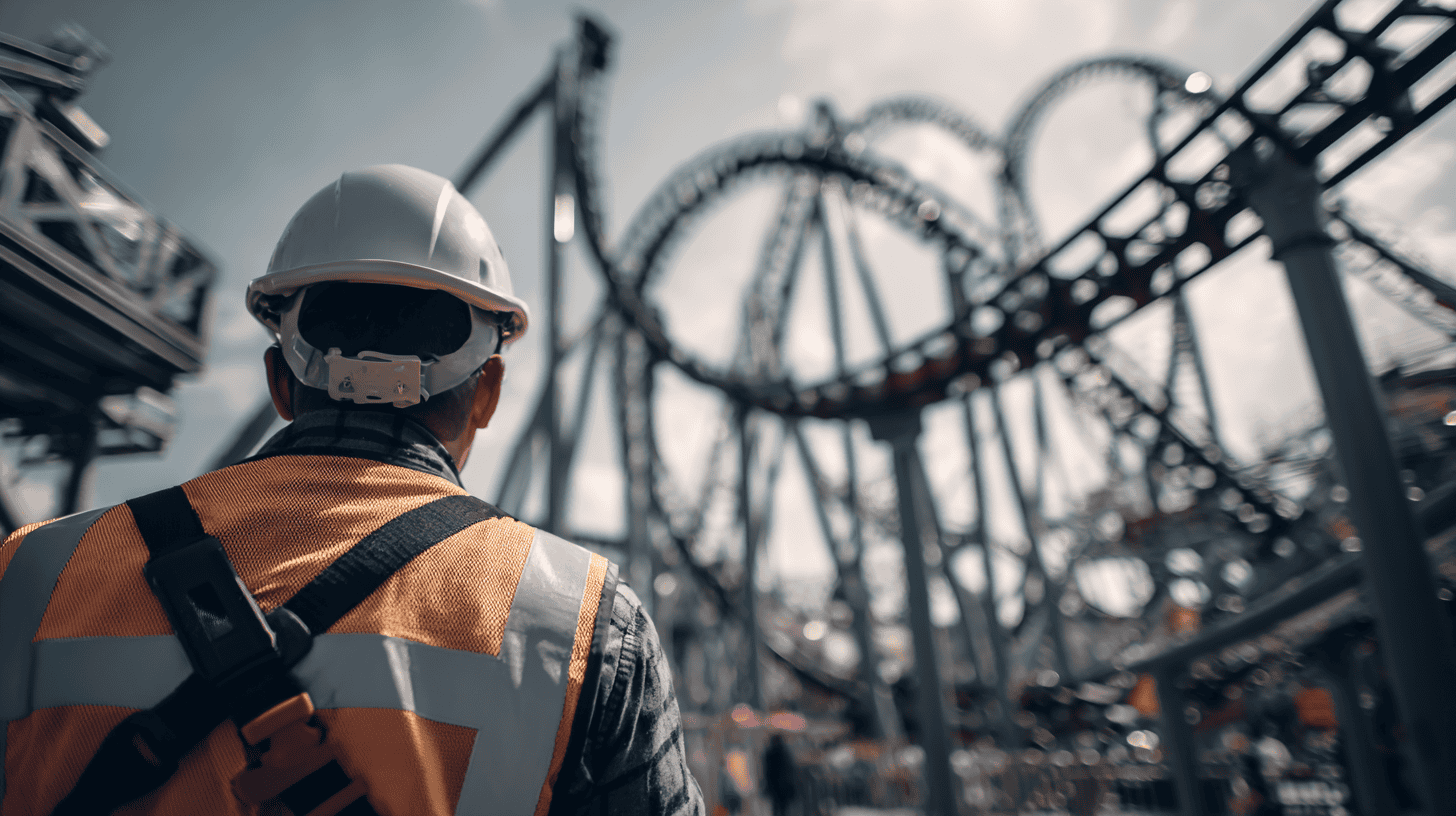
Usually due to an issue in one of the areas discussed below, roller coasters and other amusement park accidents seriously injure thousands of people every year. The amusement park industry is quick to point out that roller coaster accidents are statistically rare. But that observation is little consolation to the victims of these accidents, mostly because these incidents cause such serious injuries.
Moderate Traumatic Brain Injuries (mTBIs) may be one of the most common roller coaster accident-related injuries. Individually, mTBIs often aren’t terribly serious. But the cumulative effect of multiple mTBIs causes Chronic Traumatic Encephalopathy (CTE), a severe brain injury that’s always permanent and usually fatal.
If a pre-existing condition, like a prior mTBI, contributed to the risk and/or severity of a roller coaster accident-related injury, such as CTE, an amusement park accident lawyer in Los Angeles can still obtain maximum compensation for economic losses, such as medical bills, and noneconomic losses, such as pain and suffering. Most personal injury claims settle out of court, which means that victims get the compensation they need and deserve sooner rather than later.
Product manufacturers, like amusement parks, are in business to make a profit. To cut costs, they usually cut corners whenever possible. A recent issue at a North Carolina amusement park is a good example.
A patron recorded video of a huge crack in one of the primary support beams for one of the most popular roller coasters at a Charlotte amusement park. A manufacturing defect most likely caused that damage.
The specific problem could be a:
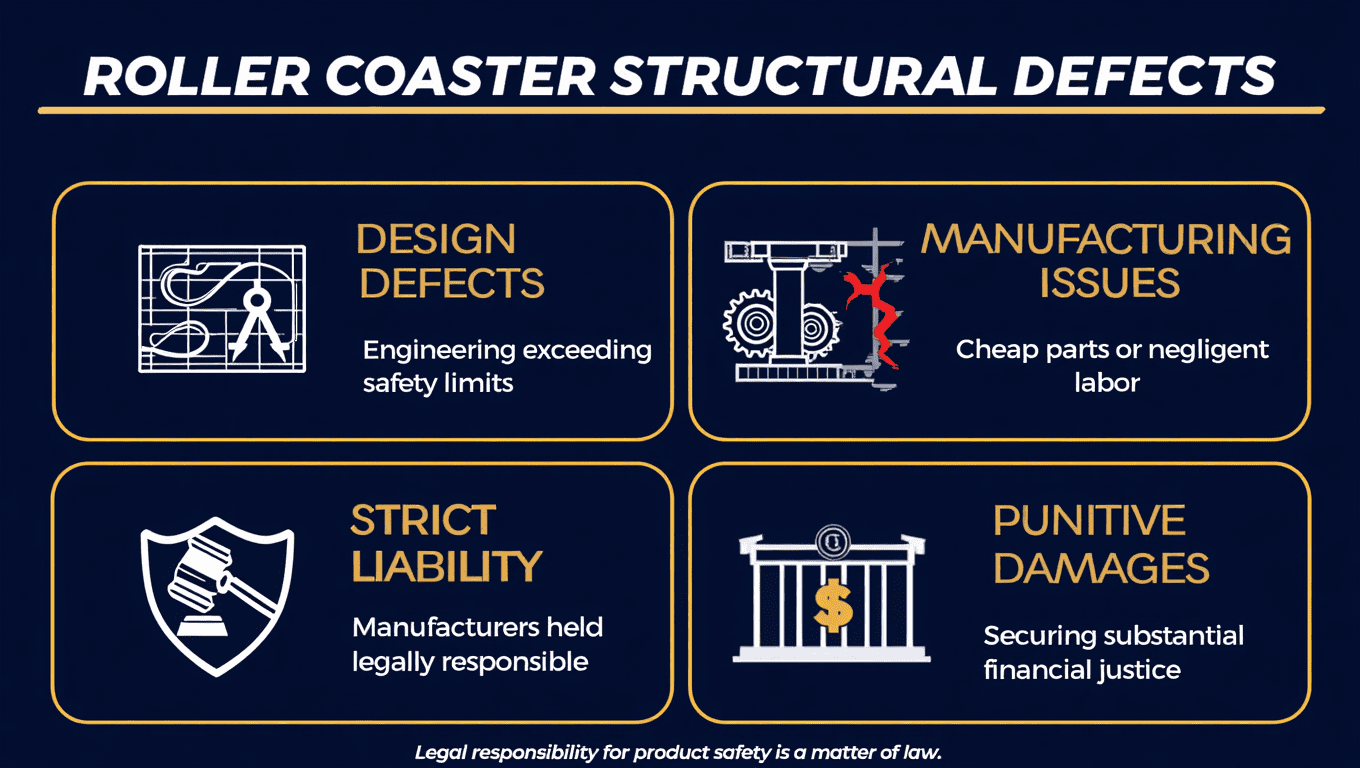
Each season, amusement parks add higher, faster, and longer roller coasters to attract guests. The nuts and bolts of these roller coasters often cannot keep pace with these higher demands. In other words, the part or other component is dangerously defective while it’s still on the drawing board.
The best-designed product is defective if the manufacturing process is defective. Manufacturing issues include negligent or poorly-trained workers, cheap parts, and shipping problems. Usually, manufacturers are legally responsible for product safety for as long as they control those products.
This legal responsibility is usually a strict liability. Manufacturers are liable for damages as a matter of law if a defective product injuries someone. In addition to compensatory damages for economic and noneconomic losses, Los Angeles Amusement Park Accident Lawyers often obtains substantial punitive damages in these matters.
We mentioned the higher and faster impulses above. These same impulses, or at least the “faster” impulse, also applies to roller coaster construction. The sooner a new roller coaster is online, the sooner the amusement park starts making money.
Cost pressures apply as well. To lower their budgets and get more work, many construction companies have skeleton crews work on large projects. When fewer people have fewer resources to do more work, mistakes are almost inevitable.
Construction injuries are almost inevitable in such an environment as well. Injured workers are often entitled to workers’ compensation benefits. These no-fault benefits replace lost wages and pay medical expenses. Some injured workers can file civil claims and obtain additional damages, mostly for emotional distress and other noneconomic losses.
Manufacturers usually include maximum occupancy and other limitations, such as the number of runs per hour. To maximize profits, amusement parks often push roller coasters to the limit. For example, if a manufacturer and/or construction company says a roller coaster should only make twenty runs per hour, it’s a safe bet that the roller coaster will run twenty-five times an hour, without a break, from opening to closing.
On an individual basis, the amusement park isn’t negligent, because it’s adhering to manufacturer standards. But the cumulative effect of twenty-five rides per hour could place so much strain on the roller coaster that the amusement park is negligent.
If negligence, or a lack of care, substantially causes injury, the amusement park is legally responsible for damages.
To many amusement parks and other businesses, maintenance is an extra cost. Amusement parks, like most other businesses, look to reduce costs whenever possible.
California law includes minimum standards for roller coaster safety, such as passenger restraint and load, strength, and electrical systems. If a roller coaster falls short in any area, such as non-working passenger restraints, and a state agency cites the park, the park could be legally responsible for damages as a matter of law, under the negligence per se rule.
Amusement parks add roller coasters to attract customers and make money. They care little about rider safety. When this attitude, and its consequences, hurts people, experienced Amusement Park Accident Lawyers in California at the Law Offices of Eslamboly Hakim advocate for victims and their families. To take the first step on the road toward fair compensation, contact us now for a free consultation.
We’re here to ease your stress and guide you through every step of recovery.
Get Support NowRoller coaster accidents seriously injure thousands of people each year. Even if they are statistically uncommon, the injuries are often severe.
Roller coaster accidents are statistically very rare, with the odds of serious injury around 1 in 15.5 million rides. Amusement parks often describe them as rare. That does not change the serious consequences for injured riders.
Common roller coaster injuries involve the head, neck, and spine, from rapid forces and sudden movement. Others include concussions, broken bones, sprains, and paralysis risks for children and the elderly.
Yes, but California law still allows compensation even if a prior condition contributed to the injury. Victims may recover both economic and noneconomic damages.
Design flaws or poor manufacturing can weaken key components. These defects can lead to serious ride failures.
Yes, manufacturers are usually strictly liable for injuries caused by defective rides. Punitive damages may also be available.
Rushed schedules and limited crews increase the chance of mistakes. These errors can compromise ride safety.
Workers are typically entitled to workers’ compensation benefits. Some may also pursue civil claims for additional damages.
Yes, running rides beyond recommended limits increases strain. Over time, this can create unsafe conditions.
Failure to meet California safety standards can trigger negligence per se. If cited by a state agency, the park may be legally responsible for injuries.
Tag:
I like the fight – the fight to hold Big Insurance accountable, the fight to find justice for real people, and the fight to level the playing field for...Read More
