 1-800-529-8255
 1-800-529-8255

 Back
Back
 Trip and Fall: $200,000 Recovered
 What Causes Jackknife Truck Accidents in California?
A jackknife truck accident can happen in seconds. When a tractor-trailer suddenly loses control and its trailer swings outward, it...
Read More
8730 Wilshire Boulevard, California 90211 
Get Help Now

Request A free confidential case review

Case Results :
Recently Written:

A jackknife truck accident can happen in seconds. When a tractor-trailer suddenly loses control and its trailer swings outward, it...
Read More

After losing a loved one in a fatal accident, families often face difficult questions about medical bills, funeral expenses, lost...
Read More

Rear-end collisions are among the most common types of car accidents in California. They can happen when a driver follows...
Read More

Whether homeowners insurance covers mold remediation in California depends largely on what caused the mold and what your policy covers....
Read More

Premises liability refers to the legal responsibility property owners have to maintain safe conditions and protect visitors from preventable injuries....
Read More
Partner with our experienced attorneys and take the first step toward justice.
Get Your Free Consultation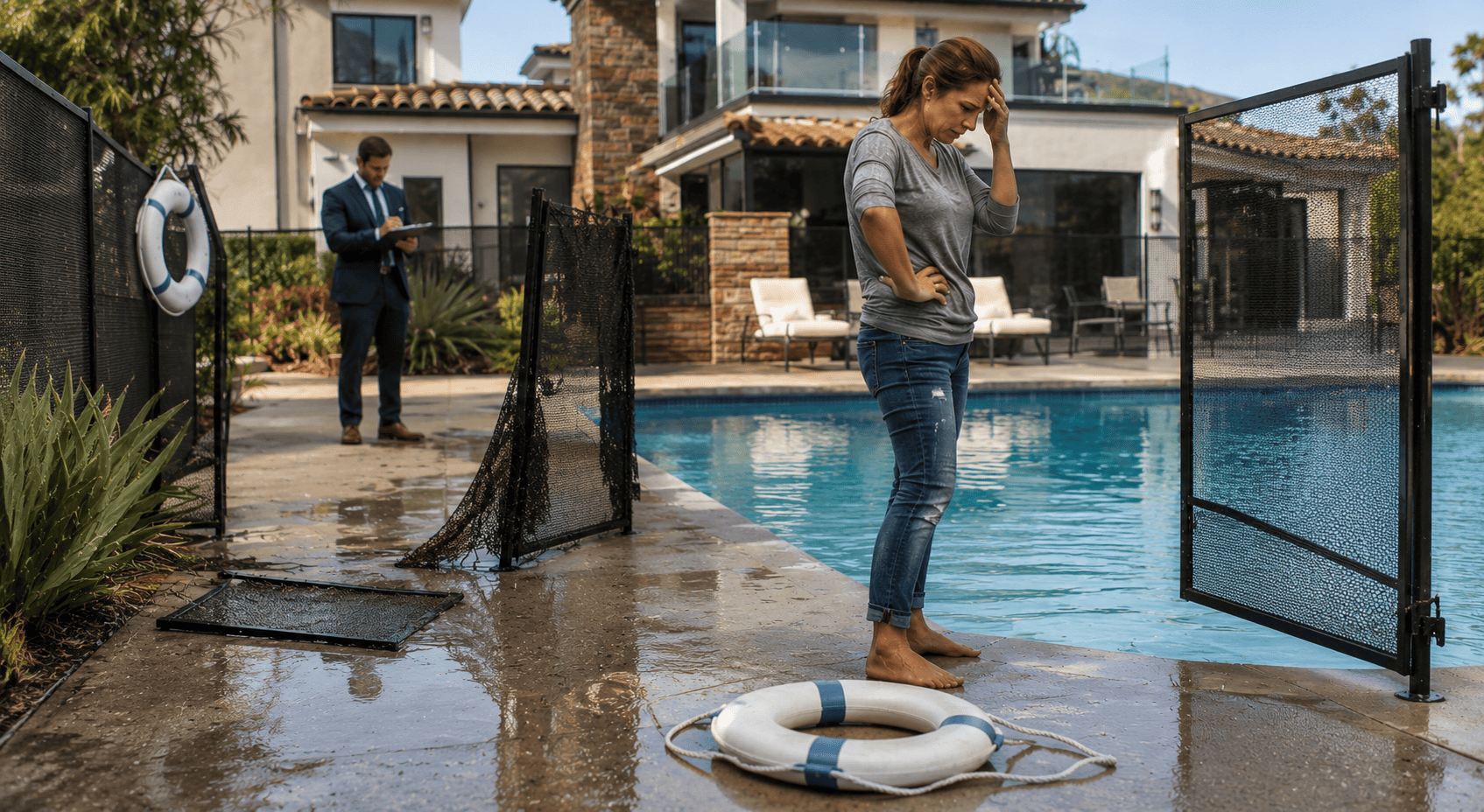
Pool owners in California have a legal duty to keep their swimming pools reasonably safe. When they fail to address hazards or comply with safety laws, serious accidents can happen, leaving victims with significant physical, emotional, and financial losses.
Understanding who may be responsible for pool safety negligence is the first step toward protecting your legal rights and recovering compensation. If you were injured in a swimming pool accident, a Los Angeles pool accident lawyer can identify the liable parties and help you pursue the compensation you deserve.
Under California premises liability law, property owners have a legal duty to maintain reasonably safe conditions and address hazards that could cause injuries. Pool safety negligence occurs when an owner fails to take reasonable steps to prevent foreseeable accidents.
Examples of pool safety negligence include failing to install required safety barriers, ignoring maintenance issues, providing inadequate supervision, or failing to warn visitors about known dangers. If these failures result in an injury or fatality, the responsible party may be held liable for the victim’s damages.
Depending on the circumstances, victims may recover compensation for medical expenses, lost wages, pain and suffering, and other accident-related losses.
Pool accidents can occur in both private and public swimming pools for many reasons. Some of the most common causes include:
These dangerous conditions can lead to drowning, near-drowning incidents, spinal cord injuries, traumatic brain injuries, broken bones, and other serious injuries.
Private pool owners have a legal duty to maintain reasonably safe conditions for guests and visitors. In California, a homeowner may be held liable if they knew, or reasonably should have known, about a dangerous condition and failed to fix it or provide adequate warning.
Liability often depends on factors such as how the accident occurred, whether the danger was foreseeable, and whether reasonable safety measures could have prevented the injury.
California law also provides special protection for children through the attractive nuisance doctrine. Because swimming pools can attract young children who may not recognize the risks, property owners are expected to take reasonable steps to prevent unauthorized access, including installing proper fencing, gates, and other required safety features.
If a child is injured or drowns after accessing an unsecured pool, the property owner may be held legally responsible for the resulting damages.
Public swimming pools may be operated by government agencies, schools, recreation centers, hotels, apartment complexes, fitness clubs, or other organizations. Depending on the circumstances, one or more parties may be responsible for maintaining a safe pool environment.
While hotels, apartment complexes, and private facilities generally follow California premises liability laws, claims involving government-operated pools are subject to the California Government Claims Act. These cases have strict filing deadlines, making it important to seek legal guidance as soon as possible after an accident.
California law requires many residential pool owners to install safety measures designed to reduce the risk of drowning and other serious injuries. Depending on the property, these safety features may include:
Failing to comply with California’s pool safety requirements may increase the risk of accidents and strengthen an injured victim’s negligence claim. If a property owner violates a safety law and that violation causes an injury, they may be held legally responsible for the resulting damages.
To recover compensation after a pool accident, you generally must prove the following four elements of negligence:
Duty of Care: The property owner or operator had a legal duty to maintain a reasonably safe swimming pool.
Breach of Duty: The owner failed to meet that duty by allowing a dangerous condition to exist or by failing to take reasonable steps to prevent an accident.
Causation: The owner’s negligence directly caused your injuries.
Damages: You suffered losses such as medical expenses, lost income, pain and suffering, or other accident-related damages.
Evidence that may help support your claim includes maintenance records, surveillance footage, photographs, witness statements, accident reports, inspection records, and expert testimony.

If you or a loved one was injured in a swimming pool accident, do not wait to protect your legal rights. Delays can make it harder to preserve evidence and meet California’s legal deadlines.
Contact the Law Offices of Eslamboly Hakim today for a free consultation. We will review your case, explain your legal options, and fight for the maximum compensation you deserve. You pay no attorney fees unless we recover compensation for you.
We’re here to ease your stress and guide you through every step of recovery.
Get Support NowIn most cases, you have two years from the date of the accident to file a personal injury lawsuit in California. If the accident occurred at a government-operated pool, you may have only six months to file a government claim. Missing these deadlines could prevent you from recovering compensation.
Not always. Liability depends on whether the owner or another responsible party failed to maintain a reasonably safe pool, ignored known hazards, or violated California safety laws. In some cases, more than one party may share responsibility.
Yes. California’s attractive nuisance doctrine may hold property owners responsible when a child is injured after gaining access to an unsecured swimming pool. Failure to install required safety barriers or fencing can increase the owner’s liability.
Depending on where the accident occurred, liability may rest with a city, county, school, hotel, apartment complex, fitness club, or another entity responsible for operating and maintaining the pool. Government-operated pools are subject to special claim procedures and deadlines.
Yes. California follows a pure comparative negligence rule. You may still recover compensation even if you were partially responsible for the accident, although your recovery may be reduced by your percentage of fault.
Depending on your case, you may recover compensation for medical expenses, lost wages, rehabilitation costs, pain and suffering, emotional distress, future medical care, and other accident-related losses.
Helpful evidence may include photographs of the accident scene, surveillance footage, maintenance and inspection records, witness statements, incident reports, and medical records. Preserving evidence as soon as possible can strengthen your claim.
While you are not legally required to hire a lawyer, pool accident claims often involve complex liability issues, insurance companies, and strict filing deadlines. An experienced Los Angeles pool accident lawyer can protect your rights, identify all liable parties, and pursue the maximum compensation available.
Tag:
I like the fight – the fight to hold Big Insurance accountable, the fight to find justice for real people, and the fight to level the playing field for...Read More
