 1-800-529-8255
 1-800-529-8255

 Back
Back
 Trip and Fall: $200,000 Recovered
 Do You Need a Los Angeles Car Accident Attorney After a Crash?
After a car accident, many victims are left dealing with painful injuries, expensive medical bills, vehicle repairs, lost income, and...
Read More
8730 Wilshire Boulevard, California 90211 
Get Help Now

Request A free confidential case review

Case Results :
Recently Written:
After a car accident, many victims are left dealing with painful injuries, expensive medical bills, vehicle repairs, lost income, and...
Read More

A lawyer’s mistake does not automatically mean legal malpractice. Even experienced attorneys can face cases that do not end in...
Read More

Facing a landlord dispute can be stressful, especially when unsafe conditions in your rental home put your health or safety...
Read More
Getting hit by an uninsured driver can leave you facing serious injuries, expensive medical bills, and uncertainty about who will...
Read More

Every day, Californians rely on products they expect to be safe, from vehicles and household appliances to medical devices and...
Read More
Partner with our experienced attorneys and take the first step toward justice.
Get Your Free Consultation
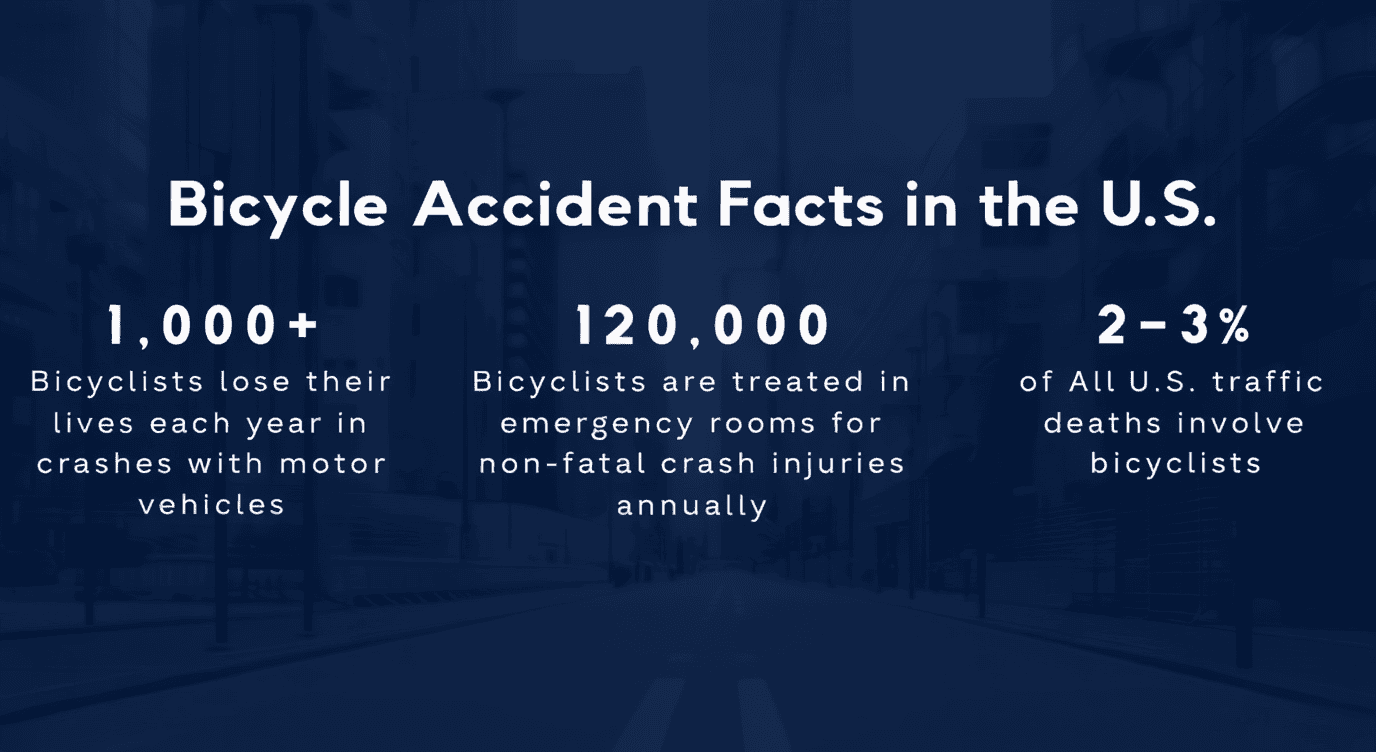
Bicycle accidents, especially in areas like Los Angeles, are on the rise. When compared with vehicle-on-vehicle accidents, bicycle-on-vehicle accidents often cause little property damage. Since emergency responders often don’t come to the scene, many victims assume they were in a minor accident.
There’s no such thing as “minor” surgery if you’re going under the knife, and there’s no such thing as a “minor” bicycle accident if you were the victim. So, a bicycle accident lawyer in Los Angeles should always evaluate your case and connect you with a doctor. Only a doctor can determine the extent of your injuries, and only a Los Angeles personal injury lawyer can determine the amount of compensation you may be entitled to.
Frequently, adrenaline masks pain. Therefore, many bicycle crash victims have undiagnosed moderate or severe traumatic brain injuries.
An mTBI is basically a concussion. Individually, these head injuries aren’t too serious. However, the cumulative effect of concussions causes a degenerative brain condition (CTE) that’s usually fatal.
A fall off a bike, as opposed to a trauma injury, often causes an sTBI. When people fall, their brains slam against the insides of their skulls. These impacts cause serious brain damage that’s usually permanent.
So, always check yourself for early head injury symptoms, like dizziness, confusion, headache, nausea. Also check yourself for surface injuries, such as:
Movie tough guys often don’t know they’ve been shot until someone points out their injuries. The same thing is true for bicycle accident victims.
Inspect other people and ask them if they’re okay, but be very careful what you say during these exchanges.
Under no circumstances should you say “I’m sorry,” even though it seems natural to apologize. Usually, these apologies express sympathy. But in court, an insurance company lawyer can twist an apology into a liability admission.
Call emergency services if anyone is injured and do not move someone who may have a neck or back injury. However, if possible, everyone should move off the roadway. Stay visible and avoid further danger from onlookers and rubberneckers.
When a 2,000-ish pound motor vehicle collides with a 20-ish pound bicycle, the impact almost always makes the bicycle unrideable. However, just like head injuries are difficult to spot, serious bicycle damage is often hard to spot. Look for:
No matter how “minor” this damage appears, it makes your bicycle unsafe to ride. You should also preserve this damage for future inspection from an insurance adjuster or a Los Angeles personal injury lawyer.
Driver error causes over 90 percent of bicycle accidents. So, another party is almost always involved.
If emergency responders or insurance investigators appear at the scene, they often assign fault to the rider or driver. Fault is a preliminary determination, much like a halftime score. The final score is all that matters, and a legal liability determination is all that matters. So, even if you were “at fault” for the crash, substantial compensation may be available. That’s especially true since both California and Nevada are comparative fault states.
Compensation in a bicycle accident claim usually includes money for economic losses, such as medical bills, and noneconomic losses, such as pain and suffering.
Obtain the other driver’s name and contact information, the vehicle’s license plate number, the other driver’s insurance company and policy number, and contact information for any witnesses. Also take pictures of the scene, the property damage, and your injuries.
A bicycle accident is an unforgettable event. But the details quickly fade. So, as soon as possible after the crash, note in writing the events leading up to the wreck and the weather and traffic conditions at the time.
Later, take detailed notes about any conversations you have with the insurance company and photograph your injuries over time.
Speaking of insurance company conversations, under no circumstances should you speak with the other driver’s insurance company. Insurance companies direct telephone adjusters to appear affable so they can extract damaging information from victims. Let your Los Angeles personal injury lawyer handle that conversation later.
If your insurance policy requires you to report a crash, by all means report it, but keep the details sketchy. “I was in a bicycle crash at the corner of 4th Street and D” is about enough.
Minor bicycle accidents often cause major injuries. For a free consultation with an experienced personal injury lawyer in California, contact the Law Offices of Eslamboly Hakim. We do not charge upfront legal fees in these matters.
We’re here to ease your stress and guide you through every step of recovery.
Get Support NowStart by checking yourself for head injuries, dizziness, confusion, pain, bleeding, or swelling, even if you feel fine at first.
Yes. Many bicycle injuries, especially head and neck injuries, are delayed and only a doctor can identify their severity.
Yes. Adrenaline often masks pain, which is why many cyclists don’t realize they’ve been seriously injured until hours or days later.
Symptoms include headaches, nausea, dizziness, confusion, memory issues, light sensitivity, and trouble concentrating.
No. Even a polite apology can be used by insurance companies as an admission of fault under California law.
Check for bent wheels, cracked frames, brake or chain damage, misaligned handlebars, and tire punctures, even if the bike looks rideable.
Get the driver’s name, insurance details, license plate number, witness contact information, and photos of the scene and injuries.
You should still document everything, seek medical care, and preserve evidence, as fault can still be determined later.
Yes. California follows comparative fault rules, so you may still receive compensation even if you share some responsibility.
Details can fade quickly. Notes, photos, and timelines help protect your claim and counter insurance company disputes later.
Tag:
I like the fight – the fight to hold Big Insurance accountable, the fight to find justice for real people, and the fight to level the playing field for...Read More
